Saying “No Problem” in German: A Comprehensive Guide
Understanding how to express simple phrases like “no problem” in a foreign language is crucial for effective communication and building rapport. In German, there are several ways to convey this sentiment, each with its nuances and appropriate contexts.
This article provides a comprehensive guide to mastering the various ways to say “no problem” in German, enhancing your fluency and cultural understanding. Whether you’re a beginner or an advanced learner, this guide will equip you with the knowledge and practice to confidently use these expressions in everyday conversations.
This article is designed for learners of all levels who want to expand their German vocabulary and improve their conversational skills. By exploring the different ways to say “no problem” in German, you’ll gain a deeper understanding of the language’s flexibility and cultural sensitivity.
Off to College Deals

Save up to 30% on everything you need for the semester.
Contains affiliate link
This knowledge will be invaluable in various situations, from casual interactions to more formal settings.
Table of Contents
- Introduction
- Definition: “No Problem” in German
- Structural Breakdown
- Types and Categories of “No Problem” in German
- Examples
- Usage Rules
- Common Mistakes
- Practice Exercises
- Advanced Topics
- FAQ
- Conclusion
Definition: “No Problem” in German
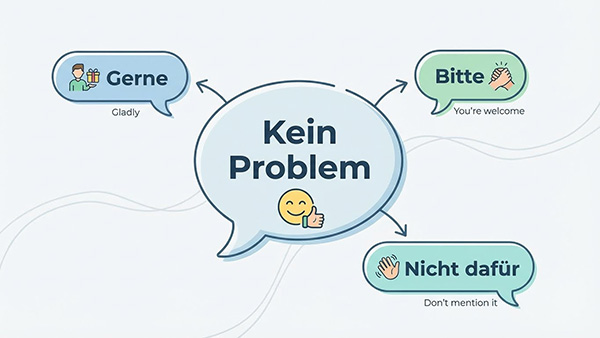
When you want to express german no problem, the phrase “Kein Problem” is simple and widely understood. Similarly, to say no problem in german language, using “Kein Problem” is appropriate in almost any casual or professional setting.
The phrase “no problem” is a common expression used to acknowledge a request, offer assistance, or dismiss an apology. In German, this sentiment can be conveyed through various phrases, each with slightly different connotations and appropriate contexts.
Understanding these nuances is essential for effective communication. These phrases often function as responses to expressions of gratitude or apologies, indicating that the speaker is happy to help or that the mistake is insignificant.
Young Adults & Students:
Get 6 Months of Prime for $0

Ages 18-24 unlock exclusive perks including:
Contains affiliate link
The German equivalents of “no problem” can be broadly classified as polite responses, assurances, or dismissals of concern. They serve to maintain social harmony and indicate goodwill between speakers.
The choice of which phrase to use depends on the specific situation, the relationship between the speakers, and the level of formality required.
For more polite or formal situations, Germans often use phrases that go beyond the standard “Kein Problem.” For instance, to say of course no problem in german, you might say “Natürlich, kein Problem,” which adds emphasis and friendliness. When replying affirmatively, you could say yes, no problem in german, which translates to “Ja, kein Problem.”
In formal settings, such as addressing a customer or senior colleague, no problem sir in german can be expressed as “Kein Problem, Herr [Name],” demonstrating respect while maintaining a friendly tone.
Structural Breakdown
The structure of each “no problem” equivalent in German varies depending on the phrase. Generally, these phrases are relatively short and straightforward, consisting of a few common words.
Understanding the grammatical components of each phrase can help you use them correctly and confidently.
For example, “Kein Problem” literally translates to “no problem,” with “kein” being the negative article and “Problem” being the noun. “Gern geschehen” is a bit more complex, meaning “gladly done,” with “gern” being an adverb and “geschehen” being the past participle of “geschehen” (to happen, to occur).
Similarly, “Nichts zu danken” means “nothing to thank for,” with “nichts” being “nothing,” “zu” being “to,” and “danken” being “to thank.” Breaking down these phrases into their individual components helps understand their literal meanings and nuances.
Types and Categories of “No Problem” in German
There are several common ways to say “no problem” in German. Each phrase has its own specific context and usage.
Here’s a breakdown of the most common expressions:
“Kein Problem”
“Kein Problem” is the most direct translation of “no problem” and is widely used in various contexts. It’s suitable for both formal and informal situations and is generally considered a safe and versatile option.
The phrase “Kein Problem” is composed of two words: “kein,” which is the negative form of “ein” (a/an), and “Problem,” which means “problem.” Therefore, the literal translation is “no problem.”
“Gern geschehen”
“Gern geschehen” is a polite and friendly way to say “you’re welcome” or “it was my pleasure.” It’s often used in response to “Danke” (thank you) and implies that you were happy to help.
“Gern geschehen” consists of “gern,” meaning “gladly” or “willingly,” and “geschehen,” the past participle of “geschehen” (to happen, to occur). The phrase literally means “gladly done.”
“Nichts zu danken”
“Nichts zu danken” translates to “nothing to thank for” and is a humble way to respond to “Danke.” It suggests that the favor you did was insignificant and didn’t require thanks.
This phrase is composed of “nichts” (nothing), “zu” (to), and “danken” (to thank). The phrase implies that the action was so minor that no thanks are necessary.
“Keine Ursache”
“Keine Ursache” is another common way to say “you’re welcome” or “no problem.” It’s slightly more formal than “Kein Problem” and implies that there’s no reason to thank you.
“Keine Ursache” consists of “keine,” the negative form of “eine” (a/an), and “Ursache,” meaning “reason” or “cause.” The phrase literally means “no reason.”
“Macht nichts”
“Macht nichts” is used to say “it doesn’t matter” or “it’s okay” in response to an apology or a minor mishap. It indicates that you’re not bothered by the mistake.
“Macht nichts” consists of “macht,” the third-person singular form of “machen” (to do, to make), and “nichts” (nothing). The phrase literally means “it does nothing” or “it doesn’t matter.”
“Schon gut”
“Schon gut” can mean “it’s alright,” “it’s okay,” or “that’s fine.” It’s often used to reassure someone after a minor inconvenience or apology.
“Schon gut” consists of “schon,” meaning “already” or “just,” and “gut,” meaning “good.” The phrase implies that the situation is already resolved or acceptable.
Examples
Here are some examples of how to use these phrases in different contexts:
“Kein Problem” Examples
The following table provides examples of using “Kein Problem” in various scenarios. This phrase is versatile and can be used in both formal and informal settings, making it a safe choice for learners.
| Scenario | German | English Translation |
|---|---|---|
| Someone thanks you for helping them. | “Danke für deine Hilfe!” – “Kein Problem.” | “Thanks for your help!” – “No problem.” |
| A colleague apologizes for being late. | “Entschuldigung, ich bin spät.” – “Kein Problem.” | “Sorry, I’m late.” – “No problem.” |
| A friend asks if you can do them a favor. | “Kannst du mir einen Gefallen tun?” – “Kein Problem.” | “Can you do me a favor?” – “No problem.” |
| Someone spills a drink. | “Oh, Entschuldigung!” – “Kein Problem.” | “Oh, sorry!” – “No problem.” |
| A customer thanks you for your service. | “Vielen Dank für Ihre Hilfe!” – “Kein Problem.” | “Thank you very much for your help!” – “No problem.” |
| Someone asks for directions. | “Könnten Sie mir bitte helfen?” – “Kein Problem.” | “Could you please help me?” – “No problem.” |
| A child asks for help with homework. | “Kannst du mir bei den Hausaufgaben helfen?” – “Kein Problem.” | “Can you help me with my homework?” – “No problem.” |
| Someone bumps into you accidentally. | “Oh, Verzeihung!” – “Kein Problem.” | “Oh, excuse me!” – “No problem.” |
| A neighbor asks to borrow something. | “Kann ich mir bitte etwas Zucker leihen?” – “Kein Problem.” | “Can I borrow some sugar, please?” – “No problem.” |
| Someone thanks you for a gift. | “Vielen Dank für das Geschenk!” – “Kein Problem.” | “Thank you very much for the gift!” – “No problem.” |
| A student asks a question after class. | “Entschuldigen Sie, ich habe eine Frage.” – “Kein Problem.” | “Excuse me, I have a question.” – “No problem.” |
| Someone thanks you for holding the door. | “Danke, dass Sie die Tür gehalten haben!” – “Kein Problem.” | “Thank you for holding the door!” – “No problem.” |
| A waiter thanks you for your order. | “Vielen Dank für Ihre Bestellung!” – “Kein Problem.” | “Thank you for your order!” – “No problem.” |
| Someone apologizes for interrupting you. | “Entschuldigung, dass ich unterbreche!” – “Kein Problem.” | “Sorry for interrupting!” – “No problem.” |
| A friend thanks you for listening to their problems. | “Danke, dass du zugehört hast!” – “Kein Problem.” | “Thanks for listening!” – “No problem.” |
| Someone asks if you can help them move furniture. | “Kannst du mir beim Möbeltragen helfen?” – “Kein Problem.” | “Can you help me move furniture?” – “No problem.” |
| A cashier thanks you for your patience. | “Danke für Ihre Geduld!” – “Kein Problem.” | “Thank you for your patience!” – “No problem.” |
| Someone asks for a small favor. | “Könntest du mir kurz helfen?” – “Kein Problem.” | “Could you help me quickly?” – “No problem.” |
| Someone thanks you for your advice. | “Vielen Dank für deinen Rat!” – “Kein Problem.” | “Thank you for your advice!” – “No problem.” |
| A colleague asks for help with a project. | “Kannst du mir bei dem Projekt helfen?” – “Kein Problem.” | “Can you help me with the project?” – “No problem.” |
“Gern geschehen” Examples
The following table provides examples of using “Gern geschehen” in various scenarios. This phrase is a polite way to respond to thanks and is often used after providing assistance or doing a favor.
| Scenario | German | English Translation |
|---|---|---|
| Someone thanks you for a gift. | “Vielen Dank für das Geschenk!” – “Gern geschehen.” | “Thank you very much for the gift!” – “You’re welcome.” |
| Someone thanks you for your help. | “Danke für deine Hilfe!” – “Gern geschehen.” | “Thanks for your help!” – “You’re welcome.” |
| A customer thanks you for your service. | “Vielen Dank für Ihre Hilfe!” – “Gern geschehen.” | “Thank you very much for your help!” – “You’re welcome.” |
| Someone thanks you for giving them directions. | “Danke, dass Sie mir den Weg erklärt haben!” – “Gern geschehen.” | “Thank you for explaining the way to me!” – “You’re welcome.” |
| Someone thanks you for a ride. | “Danke für die Fahrt!” – “Gern geschehen.” | “Thanks for the ride!” – “You’re welcome.” |
| Someone thanks you for a delicious meal. | “Danke für das leckere Essen!” – “Gern geschehen.” | “Thanks for the delicious meal!” – “You’re welcome.” |
| Someone thanks you for lending them something. | “Danke, dass du mir das geliehen hast!” – “Gern geschehen.” | “Thanks for lending me that!” – “You’re welcome.” |
| Someone thanks you for your time. | “Danke für Ihre Zeit!” – “Gern geschehen.” | “Thank you for your time!” – “You’re welcome.” |
| Someone thanks you for your advice. | “Danke für deinen Rat!” – “Gern geschehen.” | “Thanks for your advice!” – “You’re welcome.” |
| Someone thanks you for your hospitality. | “Danke für Ihre Gastfreundschaft!” – “Gern geschehen.” | “Thank you for your hospitality!” – “You’re welcome.” |
| Someone thanks you for your support. | “Danke für deine Unterstützung!” – “Gern geschehen.” | “Thanks for your support!” – “You’re welcome.” |
| Someone thanks you for your understanding. | “Danke für Ihr Verständnis!” – “Gern geschehen.” | “Thank you for your understanding!” – “You’re welcome.” |
| Someone thanks you for a thoughtful gesture. | “Danke für die nette Geste!” – “Gern geschehen.” | “Thank you for the kind gesture!” – “You’re welcome.” |
| Someone thanks you for your assistance with a task. | “Danke für deine Hilfe bei der Aufgabe!” – “Gern geschehen.” | “Thanks for your help with the task!” – “You’re welcome.” |
| Someone thanks you for your quick response. | “Danke für Ihre schnelle Antwort!” – “Gern geschehen.” | “Thank you for your quick response!” – “You’re welcome.” |
| Someone thanks you for your patience. | “Danke für Ihre Geduld!” – “Gern geschehen.” | “Thank you for your patience!” – “You’re welcome.” |
| Someone thanks you for your kind words. | “Danke für deine netten Worte!” – “Gern geschehen.” | “Thank you for your kind words!” – “You’re welcome.” |
| Someone thanks you for your invitation. | “Danke für die Einladung!” – “Gern geschehen.” | “Thank you for the invitation!” – “You’re welcome.” |
| Someone thanks you for your good wishes. | “Danke für deine guten Wünsche!” – “Gern geschehen.” | “Thank you for your good wishes!” – “You’re welcome.” |
| Someone thanks you for your guidance. | “Danke für Ihre Anleitung!” – “Gern geschehen.” | “Thank you for your guidance!” – “You’re welcome.” |
“Nichts zu danken” Examples
The following table provides examples of using “Nichts zu danken” in various scenarios. This phrase is a humble way to respond to thanks, implying that the favor you did was insignificant.
| Scenario | German | English Translation |
|---|---|---|
| Someone thanks you for holding the door open. | “Danke, dass Sie die Tür aufgehalten haben!” – “Nichts zu danken.” | “Thank you for holding the door open!” – “Nothing to thank for.” |
| Someone thanks you for a small favor. | “Danke für den kleinen Gefallen!” – “Nichts zu danken.” | “Thank you for the small favor!” – “Nothing to thank for.” |
| Someone thanks you for a quick answer. | “Danke für die schnelle Antwort!” – “Nichts zu danken.” | “Thank you for the quick answer!” – “Nothing to thank for.” |
| Someone thanks you for a simple direction. | “Danke für die Wegbeschreibung!” – “Nichts zu danken.” | “Thank you for the directions!” – “Nothing to thank for.” |
| Someone thanks you for a brief help. | “Danke für die kurze Hilfe!” – “Nichts zu danken.” | “Thank you for the brief help!” – “Nothing to thank for.” |
| Someone thanks you for a small piece of advice. | “Danke für den kleinen Rat!” – “Nichts zu danken.” | “Thank you for the small piece of advice!” – “Nothing to thank for.” |
| Someone thanks you for a quick clarification. | “Danke für die kurze Erklärung!” – “Nichts zu danken.” | “Thank you for the quick explanation!” – “Nothing to thank for.” |
| Someone thanks you for a small correction. | “Danke für die kleine Korrektur!” – “Nichts zu danken.” | “Thank you for the small correction!” – “Nothing to thank for.” |
| Someone thanks you for a minor assistance. | “Danke für die geringe Unterstützung!” – “Nichts zu danken.” | “Thank you for the minor assistance!” – “Nothing to thank for.” |
| Someone thanks you for a brief moment of your time. | “Danke für den kurzen Moment deiner Zeit!” – “Nichts zu danken.” | “Thank you for the brief moment of your time!” – “Nothing to thank for.” |
| Someone thanks you for a small act of kindness. | “Danke für die kleine Geste der Freundlichkeit!” – “Nichts zu danken.” | “Thank you for the small act of kindness!” – “Nothing to thank for.” |
| Someone thanks you for a quick favor. | “Danke für den schnellen Gefallen!” – “Nichts zu danken.” | “Thank you for the quick favor!” – “Nothing to thank for.” |
| Someone thanks you for a small compliment. | “Danke für das kleine Kompliment!” – “Nichts zu danken.” | “Thank you for the small compliment!” – “Nothing to thank for.” |
| Someone thanks you for a brief explanation. | “Danke für die kurze Erklärung!” – “Nichts zu danken.” | “Thanks for the brief explanation!” – “Nothing to thank for.” |
| Someone thanks you for a small contribution. | “Danke für den kleinen Beitrag!” – “Nichts zu danken.” | “Thanks for the small contribution!” – “Nothing to thank for.” |
| Someone thanks you for a quick response to a message. | “Danke für die schnelle Antwort auf meine Nachricht!” – “Nichts zu danken.” | “Thanks for the quick reply to my message!” – “Nothing to thank for.” |
| Someone thanks you for a minor help with a task. | “Danke für die geringe Hilfe bei der Aufgabe!” – “Nichts zu danken.” | “Thanks for the minor help with the task!” – “Nothing to thank for.” |
| Someone thanks you for a small gesture of support. | “Danke für die kleine Geste der Unterstützung!” – “Nichts zu danken.” | “Thanks for the small gesture of support!” – “Nothing to thank for.” |
| Someone thanks you for a brief moment of attention. | “Danke für den kurzen Moment der Aufmerksamkeit!” – “Nichts zu danken.” | “Thanks for the brief moment of attention!” – “Nothing to thank for.” |
| Someone thanks you for a small word of encouragement. | “Danke für das kleine Wort der Ermutigung!” – “Nichts zu danken.” | “Thanks for the small word of encouragement!” – “Nothing to thank for.” |
“Keine Ursache” Examples
The following table provides examples of using “Keine Ursache” in various scenarios. This phrase is a slightly more formal way to say “you’re welcome” or “no problem.”
| Scenario | German | English Translation |
|---|---|---|
| Someone thanks you for helping them with a task. | “Vielen Dank für Ihre Hilfe bei der Aufgabe!” – “Keine Ursache.” | “Thank you very much for your help with the task!” – “No problem.” |
| Someone thanks you for giving them directions. | “Danke, dass Sie mir den Weg erklärt haben!” – “Keine Ursache.” | “Thank you for explaining the way to me!” – “You’re welcome.” |
| Someone thanks you for your assistance. | “Danke für Ihre Unterstützung!” – “Keine Ursache.” | “Thank you for your assistance!” – “You’re welcome.” |
| Someone thanks you for your time and effort. | “Vielen Dank für Ihre Zeit und Mühe!” – “Keine Ursache.” | “Thank you very much for your time and effort!” – “You’re welcome.” |
| Someone thanks you for your professional service. | “Danke für Ihre professionelle Dienstleistung!” – “Keine Ursache.” | “Thank you for your professional service!” – “You’re welcome.” |
| Someone thanks you for your hospitality. | “Danke für Ihre Gastfreundschaft!” – “Keine Ursache.” | “Thank you for your hospitality!” – “You’re welcome.” |
| Someone thanks you for your cooperation. | “Danke für Ihre Zusammenarbeit!” – “Keine Ursache.” | “Thank you for your cooperation!” – “You’re welcome.” |
| Someone thanks you for your understanding. | “Danke für Ihr Verständnis!” – “Keine Ursache.” | “Thank you for your understanding!” – “You’re welcome.” |
| Someone thanks you for your quick response. | “Danke für Ihre schnelle Antwort!” – “Keine Ursache.” | “Thank you for your quick response!” – “You’re welcome.” |
| Someone thanks you for your patience. | “Danke für Ihre Geduld!” – “Keine Ursache.” | “Thank you for your patience!” – “You’re welcome.” |
| Someone thanks you for a thoughtful gift. | “Vielen Dank für das aufmerksame Geschenk!” – “Keine Ursache.” | “Thank you very much for the thoughtful gift!” – “You’re welcome.” |
| Someone thanks you for a kind gesture. | “Danke für die freundliche Geste!” – “Keine Ursache.” | “Thank you for the kind gesture!” – “You’re welcome.” |
| Someone thanks you for your valuable input. | “Danke für Ihren wertvollen Beitrag!” – “Keine Ursache.” | “Thank you for your valuable input!” – “You’re welcome.” |
| Someone thanks you for your detailed explanation. | “Danke für Ihre ausführliche Erklärung!” – “Keine Ursache.” | “Thank you for your detailed explanation!” – “You’re welcome.” |
| Someone thanks you for your efficient service. | “Danke für Ihre effiziente Dienstleistung!” – “Keine Ursache.” | “Thank you for your efficient service!” – “You’re welcome.” |
| Someone thanks you for your professional advice. | “Danke für Ihren professionellen Rat!” – “Keine Ursache.” | “Thank you for your professional advice!” – “You’re welcome.” |
| Someone thanks you for your important contribution. | “Danke für Ihren wichtigen Beitrag!” – “Keine Ursache.” | “Thank you for your important contribution!” – “You’re welcome.” |
| Someone thanks you for your significant help. | “Danke für Ihre bedeutende Hilfe!” – “Keine Ursache.” | “Thank you for your significant help!” – “You’re welcome.” |
| Someone thanks you for your invaluable assistance. | “Danke für Ihre unschätzbare Unterstützung!” – “Keine Ursache.” | “Thank you for your invaluable assistance!” – “You’re welcome.” |
| Someone thanks you for your exceptional service. | “Danke für Ihren außergewöhnlichen Service!” – “Keine Ursache.” | “Thank you for your exceptional service!” – “You’re welcome.” |
“Macht nichts” Examples
The following table provides examples of using “Macht nichts” in various scenarios. This phrase is used to say “it doesn’t matter” or “it’s okay” in response to an apology or a minor mishap.
| Scenario | German | English Translation |
|---|---|---|
| Someone spills a drink. | “Oh, Entschuldigung, ich habe dein Getränk verschüttet!” – “Macht nichts.” | “Oh, sorry, I spilled your drink!” – “It doesn’t matter.” |
| Someone is late for an appointment. | “Entschuldigung, ich bin zu spät!” – “Macht nichts.” | “Sorry, I’m late!” – “It doesn’t matter.” |
| Someone forgets to bring something. | “Oh, ich habe das Buch vergessen!” – “Macht nichts.” | “Oh, I forgot the book!” – “It doesn’t matter.” |
| Someone makes a small mistake. | “Entschuldigung, ich habe einen Fehler gemacht!” – “Macht nichts.” | “Sorry, I made a mistake!” – “It doesn’t matter.” |
| Someone accidentally bumps into you. | “Oh, Verzeihung!” – “Macht nichts.” | “Oh, excuse me!” – “It doesn’t matter.” |
| Someone forgets your name. | “Entschuldigung, wie war dein Name noch mal?” – “Macht nichts.” | “Sorry, what was your name again?” – “It doesn’t matter.” |
| Someone is unable to attend an event. | “Entschuldigung, ich kann leider nicht kommen!” – “Macht nichts.” | “Sorry, I can’t come!” – “It doesn’t matter.” |
| Someone accidentally deletes a file. | “Oh nein, ich habe die Datei versehentlich gelöscht!” – “Macht nichts, ich habe eine Sicherungskopie.” | “Oh no, I accidentally deleted the file!” – “It doesn’t matter, I have a backup.” |
| Someone forgets to reply to an email. | “Entschuldigung, ich habe vergessen, auf deine E-Mail zu antworten!” – “Macht nichts.” | “Sorry, I forgot to reply to your email!” – “It doesn’t matter.” |
| Someone is unable to complete a task on time. | “Entschuldigung, ich konnte die Aufgabe nicht rechtzeitig erledigen!” – “Macht nichts, wir haben noch Zeit.” | “Sorry, I couldn’t finish the task on time!” – “It doesn’t matter, we still have time.” |
| Someone spills coffee on their clothes. | “Oh nein, ich habe Kaffee auf meine Kleidung verschüttet!” – “Macht nichts, du kannst es auswaschen.” | “Oh no, I spilled coffee on my clothes!” – “It doesn’t matter, you can wash it out.” |
| Someone forgets to bring their wallet. | “Oh, ich habe meine Brieftasche vergessen!” – “Macht nichts, ich bezahle.” | “Oh, I forgot my wallet!” – “It doesn’t matter, I’ll pay.” |
| Someone makes a minor error in their work. | “Entschuldigung, ich habe einen kleinen Fehler in meiner Arbeit gemacht!” – “Macht nichts, wir können ihn korrigieren.” | “Sorry, I made a small error in my work!” – “It doesn’t matter, we can correct it.” |
| Someone accidentally breaks something small. | “Oh, Entschuldigung, ich habe es kaputt gemacht!” – “Macht nichts, es war nicht wichtig.” | “Oh, sorry, I broke it!” – “It doesn’t matter, it wasn’t important.” |
| Someone forgets to bring a gift. | “Entschuldigung, ich habe vergessen, ein Geschenk mitzubringen!” – “Macht nichts, deine Anwesenheit ist genug.” | “Sorry, I forgot to bring a gift!” – “It doesn’t matter, your presence is enough.” |
| Someone is unable to remember a detail. | “Entschuldigung, ich kann mich nicht erinnern!” – “Macht nichts, es ist nicht wichtig.” | “Sorry, I can’t remember!” – “It doesn’t matter, it’s not important.” |
| Someone accidentally uses the wrong word. | “Entschuldigung, ich habe das falsche Wort benutzt!” – “Macht nichts, ich habe verstanden, was du meinst.” | “Sorry, I used the wrong word!” – “It doesn’t matter, I understood what you meant.” |
| Someone is unable to help with a task. | “Entschuldigung, ich kann dir leider nicht helfen!” – “Macht nichts, ich finde eine andere Lösung.” | “Sorry, I can’t help you!” – “It doesn’t matter, I’ll find another solution.” |
| Someone forgets to bring a document. | “Entschuldigung, ich habe das Dokument vergessen!” – “Macht nichts, wir können es später nachreichen.” | “Sorry, I forgot the document!” – “It doesn’t matter, we can submit it later.” |
| Someone is unable to attend a meeting. | “Entschuldigung, ich kann an dem Meeting nicht teilnehmen!” – “Macht nichts, wir können es verschieben.” | “Sorry, I can’t attend the meeting!” – “It doesn’t matter, we can reschedule it.” |
“Schon gut” Examples
The following table provides examples of using “Schon gut” in various scenarios. This phrase is used to say “it’s alright,” “it’s okay,” or “that’s fine,” often to reassure someone after a minor inconvenience or apology.
| Scenario | German | English Translation |
|---|---|---|
| Someone apologizes for a small mistake. | “Entschuldigung, ich habe einen kleinen Fehler gemacht!” – “Schon gut.” | “Sorry, I made a small mistake!” – “It’s alright.” |
| Someone bumps into you accidentally. | “Oh, Verzeihung!” – “Schon gut.” | “Oh, excuse me!” – “It’s okay.” |
| Someone is slightly late. | “Entschuldigung, ich bin ein bisschen spät.” – “Schon gut.” | “Sorry, I’m a little late.” – “It’s alright.” |
| Someone spills a little water. | “Oh, Entschuldigung, ich habe etwas Wasser verschüttet!” – “Schon gut.” | “Oh, sorry, I spilled some water!” – “It’s okay.” |
| Someone corrects a minor error. | “Entschuldigung, ich habe das korrigiert.” – “Schon gut.” | “Sorry, I corrected that.” – “That’s fine.” |
| Someone realizes they were mistaken. | “Oh, Entschuldigung, ich habe mich geirrt!” – “Schon gut.” | “Oh, sorry, I was mistaken!” – “It’s alright.” |
| Someone offers a slight correction. | “Entschuldigung, darf ich dich kurz korrigieren?” – “Schon gut.” | “Excuse me, may I quickly correct you?” – “That’s fine.” |
| Someone expresses mild concern about something. | “Ich bin ein bisschen besorgt.” – “Schon gut, alles wird gut.” | “I’m a little worried.” – “It’s alright, everything will be fine.” |
| Someone apologizes for a brief interruption. | “Entschuldigung für die kurze Unterbrechung!” – “Schon gut.” | “Sorry for the brief interruption!” – “It’s okay.” |
| Someone admits to a small oversight. | “Entschuldigung, ich habe das übersehen!” – “Schon gut.” | “Sorry, I overlooked that!” – “It’s alright.” |
| Someone acknowledges a minor inconvenience. | “Es tut mir leid für die Unannehmlichkeiten!” – “Schon gut.” | “I’m sorry for the inconvenience!” – “It’s alright.” |
| Someone expresses mild frustration. | “Ich bin ein bisschen frustriert.” – “Schon gut, gib nicht auf!” | “I’m a little frustrated.” – “It’s alright, don’t give up!” |
| Someone apologizes for a small delay. | “Entschuldigung für die kleine Verzögerung!” – “Schon gut.” | “Sorry for the small delay!” – “It’s alright.” |
| Someone admits to a small misunderstanding. | “Entschuldigung, ich habe das falsch verstanden!” – “Schon gut.” | “Sorry, I misunderstood that!” – “It’s okay.” |
| Someone reassures after a small scare. | “Ich habe mich kurz erschrocken!” – “Schon gut, alles ist sicher.” | “I was briefly scared!” – “It’s alright, everything is safe.” |
| Someone acknowledges a minor difficulty. | “Es ist ein bisschen schwierig.” – “Schon gut, du schaffst das!” | “It’s a little difficult.” – “It’s alright, you can do it!” |
| Someone apologizes for a brief distraction. | “Entschuldigung für die kurze Ablenkung!” – “Schon gut.” | “Sorry for the brief distraction!” – “It’s okay.” |
| Someone admits to a small mistake in judgment. | “Entschuldigung, ich habe das falsch eingeschätzt!” – “Schon gut.” | “Sorry, I misjudged that!” – “It’s alright.” |
| Someone reassures after a slight stumble. | “Ich bin fast gestolpert!” – “Schon gut, pass auf dich auf!” | “I almost stumbled!” – “It’s alright, take care!” |
| Someone acknowledges a minor setback. | “Es gab einen kleinen Rückschlag.” – “Schon gut, wir machen weiter!” | “There was a small setback.” – “It’s alright, we’ll keep going!” |
Usage Rules
While many of these phrases can be used interchangeably, some have specific contexts where they are more appropriate. Understanding these usage rules can help you communicate more effectively and avoid misunderstandings.
- “Kein Problem”: This is the most versatile and can be used in almost any situation where you want to say “no problem.” It’s suitable for both formal and informal settings.
- “Gern geschehen”: Use this phrase when you want to politely acknowledge someone’s thanks. It implies that you were happy to help and is more formal than “Kein Problem.”
- “Nichts zu danken”: This is a humble response to thanks, suggesting that the favor you did was insignificant. It’s suitable for informal situations and when you want to downplay your contribution.
- “Keine Ursache”: This is a more formal way of saying “you’re welcome” and is appropriate in professional or polite settings. It implies that there was no reason for the other person to thank you.
- “Macht nichts”: Use this phrase when you want to reassure someone that a mistake or mishap is not a big deal. It’s suitable for informal situations and when you want to be comforting.
- “Schon gut”: This phrase is used to reassure someone that everything is alright or that a minor inconvenience is not a problem. It’s suitable for informal situations and when you want to be supportive.
Common Mistakes
Learners often make mistakes when using these phrases due to direct translations or misunderstandings of their nuances. Here are some common mistakes to avoid:
- Using “Kein Problem” in all situations: While “Kein Problem” is versatile, it’s not always the most appropriate choice. In formal settings, “Gern geschehen” or “Keine Ursache” may be more suitable.
- Misunderstanding “Nichts zu danken”: This phrase is humble and should only be used when you genuinely feel that the favor you did was insignificant. Overusing it can come across as insincere.
- Using “Macht nichts” inappropriately: This phrase is only suitable when someone is apologizing for a mistake or mishap. It should not be used as a general response to thanks.
- Confusing “Schon gut” with other phrases: “Schon gut” is specifically used to reassure someone that everything is alright. It should not be used as a direct translation of “you’re welcome.”
- Directly translating “You are welcome”: There isn’t a direct equivalent of “You are welcome” in German. Instead, use “Gern geschehen” or “Keine Ursache” to convey the same sentiment.
Practice Exercises
To reinforce your understanding of these phrases, try these practice exercises:
- Scenario Matching: Match each scenario with the most appropriate “no problem” phrase.
- Someone thanks you for helping them move furniture.
- Someone apologizes for spilling coffee on your shirt.
- Someone thanks you for a thoughtful birthday gift.
- Someone thanks you for holding the door open for them.
- Someone is worried about being late for a meeting.
- Gern geschehen / Keine Ursache
- Macht nichts
- Gern geschehen / Keine Ursache
- Nichts zu danken
- Schon gut
- Translation Practice: Translate the following English sentences into German, using the appropriate “no problem” phrase.
- “Thank you for your help!” – “You’re welcome.”
- “Sorry I’m late!” – “It doesn’t matter.”
- “Thank you for the gift!” – “It was my pleasure.”
- “Thank you for holding the door!” – “Nothing to thank for.”
- “I’m a little worried.” – “It’s alright.”
- “Danke für deine Hilfe!” – “Gern geschehen / Keine Ursache.”
- “Entschuldigung, ich bin spät!” – “Macht nichts.”
- “Danke für das Geschenk!” – “Gern geschehen.”
- “Danke, dass Sie die Tür gehalten haben!” – “Nichts zu danken.”
- “Ich bin ein bisschen besorgt.” – “Schon gut.”
- Dialogue Creation: Create short dialogues using the different “no problem” phrases in various contexts.
Advanced Topics
For advanced learners, consider exploring these related topics to further enhance your understanding of German conversational nuances:
- Regional Variations: Explore regional variations in the use of these phrases. Some expressions may be more common in certain parts of Germany, Austria, or Switzerland.
- Formal vs. Informal Language: Deepen your understanding of when to use formal (Sie) versus informal (du) language and how it affects your choice of “no problem” phrases.
- Cultural Sensitivity: Learn about cultural nuances related to expressing gratitude and humility in German-speaking countries.
- Synonyms and Alternatives: Explore other ways to express similar sentiments, such as “Kein Ding,” “Passt schon,” or “Alles gut.”
FAQ
Is “Kein Problem” always appropriate?
While “Kein Problem” is versatile, it may not be the most suitable choice in formal settings. “Gern geschehen” or “Keine Ursache” are often better options in professional or polite situations.
What’s the difference between “Gern geschehen” and “Keine Ursache”?
“Gern geschehen” implies that you were happy to help, while “Keine Ursache” suggests that there was no real reason for the other person to thank you. Both are polite ways to respond to thanks, but “Keine Ursache” is slightly more formal.
When should I use “Nichts zu danken”?
Use “Nichts zu danken” when you genuinely feel that the favor you did was insignificant and didn’t require thanks. It’s a humble response and should be used sparingly to avoid sounding insincere.
Can I use “Macht nichts” in response to thanks?
No, “Macht nichts” is only suitable when someone is apologizing for a mistake or mishap. It should not be used as a general response to thanks.
What does “Schon gut” really mean?
“Schon gut” means “it’s alright,” “it’s okay,” or “that’s fine.” It’s used to reassure someone that everything is acceptable or that a minor inconvenience is not a problem.
Are there regional differences in how these phrases are used?
Yes, some expressions may be more common in certain regions. For example, some phrases might be more prevalent in Austria or Switzerland compared to Germany.
It’s always good to be aware of regional variations.
Conclusion
Mastering the various ways to say “no problem” in German is essential for effective communication and building positive relationships. By understanding the nuances of each phrase and practicing their usage in different contexts, you can confidently navigate everyday conversations and express yourself with greater precision and cultural sensitivity.
Whether you choose “Kein Problem,” “Gern geschehen,” “Nichts zu danken,” “Keine Ursache,” “Macht nichts,” or “Schon gut,” you’ll be well-equipped to respond appropriately and maintain social harmony in German-speaking environments. Keep practicing and refining your understanding, and you’ll soon find these expressions becoming second nature.

M. Thomas writes language-learning guides for EnglishScribe, covering grammar, vocabulary, and everyday expressions. Through clear explanations, practical examples, and exercises, Thomas helps ESL learners understand English and build confidence in using it.