Adjectives for “Mad”: A Comprehensive Guide to Expressing Anger
Expressing emotions accurately and vividly is crucial for effective communication. When it comes to describing anger, simply saying someone is “mad” can often feel insufficient.
When describing emotions in writing, you can use adjectives to describe an angry person or words to describe a mad person to convey precise emotional states.
Understanding what is a character trait for mad example, such as impatience or a quick temper, allows writers to craft realistic characters. Similarly, knowing how todescribe someone being realyy mad—whether slightly annoyed or completely enraged—adds depth and clarity to your descriptions.
Off to College Deals

Save up to 30% on everything you need for the semester.
Contains affiliate link
English offers a rich array of adjectives to convey different nuances of anger, from mild irritation to explosive rage. Understanding these adjectives allows you to paint a more precise and compelling picture of a person’s emotional state.
This article delves into the world of adjectives for “mad,” exploring their meanings, usage, and providing numerous examples to enhance your vocabulary and improve your writing and speaking skills. This guide is perfect for English language learners, writers, and anyone looking to expand their emotional vocabulary.
Table of Contents
- Definition of “Mad” and Related Adjectives
- Structural Breakdown: Adjective Intensifiers
- Types and Categories of Adjectives for “Mad”
- Examples of Adjectives for “Mad”
- Usage Rules for Adjectives Describing Anger
- Common Mistakes When Using Adjectives for Anger
- Practice Exercises
- Advanced Topics: Figurative Language and Idioms
- Frequently Asked Questions
- Conclusion
Definition of “Mad” and Related Adjectives
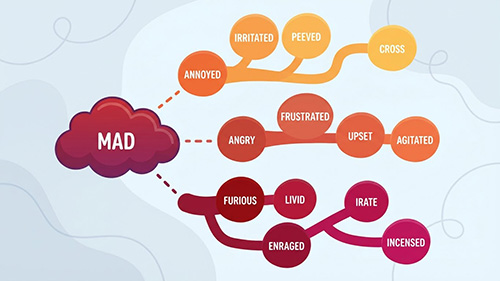
The word “mad” itself is a versatile adjective that generally describes a state of anger or frustration. However, its broad meaning often requires more specific adjectives to accurately convey the intensity and nature of the emotion.
These related adjectives help distinguish between a slight annoyance and a full-blown fury. They allow us to precisely describe the specific flavor of the character’s anger.
Young Adults & Students:
Get 6 Months of Prime for $0

Ages 18-24 unlock exclusive perks including:
Contains affiliate link
The function of these adjectives is to modify nouns (usually people) to describe their emotional state.
Classification: Adjectives are classified based on whether they are descriptive (e.g., furious, irate) or limiting (e.g., the, a). The adjectives we are discussing here are mainly descriptive adjectives. They provide information about the quality or state of the noun they modify.
Function: Adjectives function to provide more information about nouns. They can be used to describe appearance, size, shape, color, origin, and, in this case, emotions. They make sentences more vivid and descriptive.
Contexts: The context in which you use these adjectives is crucial. For example, using “livid” might be appropriate in a formal setting to describe extreme anger, while “peeved” is more suitable for informal situations describing slight annoyance.
To express stronger emotions, you can use a word for mad intensified like enraged, incensed, or absolutely furious. For milder states, the what is the adjective for a bit mad question can be answered with terms like peeved, slightly irritated, or a tad annoyed to convey subtle anger without exaggeration.
Structural Breakdown: Adjective Intensifiers
Adjectives describing anger can be intensified by using adverbs. Understanding how to use these intensifiers can help you convey the degree of anger more effectively.
Common Intensifiers: Common adverbs used to intensify adjectives include very, extremely, incredibly, utterly, completely, absolutely, and slightly.
Placement: Intensifiers are typically placed before the adjective they modify. For instance, “very angry” or “incredibly furious.”
Example: Consider these sentences:
- “She was angry about the delay.”
- “She was very angry about the delay.”
- “She was absolutely furious about the delay.”
The use of intensifiers elevates the level of anger being expressed in each sentence.
Types and Categories of Adjectives for “Mad”
Adjectives for “mad” can be categorized based on the intensity and nature of the emotion they describe. Here’s a breakdown of different categories:
Sometimes, a person’s demeanor can seem angry even if they are inherently kind. Using adjectives for someone nice but always looks mad, such as stern-looking, gruff, or foreboding, allows writers to capture this contrast. Contextual cues, like friendly actions or tone, clarify that their outward anger is misleading.
Addressing this nuance enriches character development, enabling readers to distinguish between appearance and true temperament. Correctly using adjectives for someone nice but \always looks mad ensures clarity in writing and adds subtle psychological depth.
Mild Annoyance
These adjectives describe a slight level of irritation or displeasure.
- Annoyed: Slightly irritated; bothered.
- Irked: Slightly annoyed or irritated.
- Peeved: Annoyed, irritated, or disgruntled.
- Miffed: Slightly annoyed; put out.
- Displeased: Feeling or showing dissatisfaction or disapproval.
Irritation
These adjectives indicate a stronger feeling of annoyance and impatience.
- Irritated: Feeling or showing annoyance.
- Exasperated: Intensely irritated and frustrated.
- Aggravated: Made worse; irritated.
- Bothered: Feeling or showing concern or worry.
- Agitated: Feeling or appearing troubled or nervous.
Anger
These adjectives describe a more intense feeling of displeasure and hostility.
- Angry: Feeling or showing strong displeasure.
- Upset: Unhappy, disappointed, or worried.
- Indignant: Feeling or showing anger or annoyance at what is perceived as unfair treatment.
- Resentful: Feeling or expressing bitterness or indignation at having been treated unfairly.
- Cross: Annoyed; bad-tempered.
Rage
These adjectives convey extreme anger and fury.
- Furious: Extremely angry.
- Irate: Feeling or showing extreme anger.
- Enraged: Very angry; furious.
- Livid: Furiously angry.
- Incensed: Very angry; enraged.
Resentment
These adjectives focus on anger mixed with a sense of injustice.
- Bitter: Feeling or showing resentment, disappointment, or anger.
- Acrimonious: Angry and bitter.
- Embittered: Feeling bitter or resentful.
- Jaundiced: Prejudiced, bitter, or cynical.
- Wounded: Feeling emotional pain.
Disapproval
These adjectives express anger stemming from not agreeing with something.
- Disapproving: Expressing or feeling disapproval.
- Critical: Expressing adverse or disapproving comments or judgments.
- Condemnatory: Expressing strong disapproval; censorious.
- Reproachful: Expressing disapproval or disappointment.
- Censorious: Severely critical of others.
Examples of Adjectives for “Mad”
The following tables provide examples of how each adjective can be used in a sentence. Each table focuses on a different category of emotion to help illustrate the nuances between them.
Table 1: Mild Annoyance
This table provides examples of adjectives describing mild annoyance. Notice how these adjectives are often used in informal contexts.
| Adjective | Example Sentence |
|---|---|
| Annoyed | She was annoyed by the constant notifications on her phone. |
| Irked | He was irked by the slow internet connection. |
| Peeved | I was a little peeved that he didn’t call. |
| Miffed | She seemed miffed that she wasn’t invited to the party. |
| Displeased | The teacher was displeased with the student’s lack of effort. |
| Slightly annoyed | He was slightly annoyed when his colleague interrupted him during the presentation. |
| A bit irritated | She was a bit irritated by the loud music coming from next door. |
| Mildly bothered | He was mildly bothered by the fly buzzing around his head. |
| Somewhat disgruntled | The customer was somewhat disgruntled with the poor service at the restaurant. |
| A little put out | She was a little put out when she found out her friend had already seen the movie without her. |
| A tad displeased | The manager was a tad displeased with the team’s performance this quarter. |
| Marginally irked | He was marginally irked by the repetitive nature of his job. |
| Not thrilled | She was not thrilled to have to work overtime on a Friday night. |
| Less than pleased | The parents were less than pleased with their child’s poor grades. |
| A bit bothered | He was a bit bothered by the constant construction noise outside his apartment. |
| Slightly agitated | She felt slightly agitated waiting in the long line at the grocery store. |
| Mildly frustrated | He was mildly frustrated with the software’s glitches. |
| A little disgruntled | The employees were a little disgruntled with the new company policies. |
| Somewhat inconvenienced | She felt somewhat inconvenienced by the detour on her way to work. |
| A tad annoyed | He was a tad annoyed when his sibling borrowed his clothes without asking. |
| Barely bothered | She was barely bothered by the minor criticism she received. |
| Minimally irritated | He was minimally irritated by the small talk at the party. |
Table 2: Anger and Irritation
This table illustrates adjectives that describe more pronounced anger and irritation. These adjectives are suitable for situations where the emotion is more noticeable.
| Adjective | Example Sentence |
|---|---|
| Irritated | She became irritated when he kept interrupting her. |
| Exasperated | He was exasperated by the endless bureaucracy. |
| Aggravated | The situation was aggravated by his insensitive comments. |
| Bothered | I was really bothered by his rude behavior. |
| Agitated | She was agitated by the constant pressure at work. |
| Angry | He was angry that he had been lied to. |
| Upset | She was upset by the news of her friend’s accident. |
| Indignant | He was indignant at the unfair accusations. |
| Resentful | She felt resentful of her brother’s success. |
| Cross | He was cross with the children for making a mess. |
| Very irritated | She was very irritated by the constant noise in the office. |
| Extremely exasperated | He was extremely exasperated with the slow progress on the project. |
| Deeply aggravated | The problem was deeply aggravated by the lack of communication. |
| Really bothered | She was really bothered by the way he spoke to her. |
| Visibly agitated | He was visibly agitated while waiting for the test results. |
| Quite angry | She was quite angry when she discovered the mistake. |
| Clearly upset | He was clearly upset by the harsh criticism. |
| Righteously indignant | She was righteously indignant at the company’s unethical practices. |
| Extremely resentful | He felt extremely resentful towards his former business partner. |
| Visibly cross | The teacher was visibly cross with the students for their disruptive behavior. |
| Increasingly irritated | She became increasingly irritated as the meeting dragged on. |
| Noticeably exasperated | He was noticeably exasperated by the repeated technical issues. |
Table 3: Rage and Intense Anger
This table provides examples of adjectives describing intense anger and rage. These adjectives are reserved for situations where the emotion is extreme.
| Adjective | Example Sentence |
|---|---|
| Furious | He was furious when he found out about the betrayal. |
| Irate | The customer was irate about the poor service. |
| Enraged | She was enraged by the injustice. |
| Livid | He was livid with anger. |
| Incensed | The community was incensed by the politician’s remarks. |
| Absolutely furious | She was absolutely furious when she discovered the lies. |
| Completely irate | The manager was completely irate about the missed deadline. |
| Utterly enraged | He was utterly enraged by the destruction of his property. |
| Seething with anger | She was seething with anger after the argument. |
| Consumed by rage | He was consumed by rage and couldn’t think straight. |
| Wildly furious | The coach was wildly furious after the team’s loss. |
| Absolutely livid | She was absolutely livid when she saw the damage to her car. |
| Incredibly incensed | The public was incredibly incensed by the government’s decision. |
| Beyond furious | He was beyond furious and demanded an immediate apology. |
| Almost berserk | She was almost berserk with anger and frustration. |
| Totally enraged | He was totally enraged by the blatant disregard for the rules. |
| Absolutely incandescent | She was absolutely incandescent with rage. |
| Seething with fury | He was seething with fury after the unfair judgment. |
| Driven by rage | She was driven by rage to seek revenge. |
| Incensed beyond measure | The villagers were incensed beyond measure by the invaders. |
| Blazing with anger | He was blazing with anger after hearing the false accusations. |
| Lost in fury | She was lost in fury and lashed out at everyone around her. |
Table 4: Resentment and Disapproval
This table illustrates adjectives that describe emotions rooted in resentment and disapproval. These often carry a sense of injustice or moral indignation.
| Adjective | Example Sentence |
|---|---|
| Bitter | He felt bitter about the missed opportunity. |
| Acrimonious | Their relationship became acrimonious after the business deal fell apart. |
| Embittered | She was embittered by years of hardship. |
| Jaundiced | He had a jaundiced view of the world after his experiences. |
| Wounded | She felt wounded by his harsh words. |
| Disapproving | The parents were disapproving of their daughter’s choice. |
| Critical | The reviewer was critical of the movie’s plot. |
| Condemnatory | The report was condemnatory of the company’s practices. |
| Reproachful | She gave him a reproachful look. |
| Censorious | He was known for his censorious attitude. |
| Deeply bitter | She felt deeply bitter about the injustices she had faced. |
| Increasingly acrimonious | The negotiations became increasingly acrimonious over time. |
| Thoroughly embittered | He was thoroughly embittered by his experiences in the war. |
| Incredibly jaundiced | She had an incredibly jaundiced view of human nature. |
| Profoundly wounded | He felt profoundly wounded by the betrayal of his friends. |
| Strongly disapproving | The community was strongly disapproving of the proposed development. |
| Highly critical | The critics were highly critical of the new policy. |
| Severely condemnatory | The judge’s ruling was severely condemnatory of the defendant’s actions. |
| Mildly reproachful | She gave him a mildly reproachful glance. |
| Excessively censorious | He was considered excessively censorious by his colleagues. |
| Visibly bitter | She was visibly bitter as she spoke about her past. |
| Openly disapproving | He was openly disapproving of the new management’s decisions. |
Usage Rules for Adjectives Describing Anger
Using adjectives describing anger correctly involves understanding their specific connotations and the context in which they are used. Here are some key rules to follow:
- Choose the Right Intensity: Select an adjective that accurately reflects the level of anger you want to convey. Using “annoyed” when you mean “furious” will understate the emotion.
- Consider the Context: The formality of the situation should influence your choice of words. “Peeved” might be suitable for a casual conversation, while “indignant” is more appropriate for a formal discussion.
- Avoid Overuse: Using strong adjectives like “furious” too frequently can diminish their impact. Reserve them for truly intense situations.
- Pay Attention to Nuance: Understand the subtle differences between similar adjectives. For example, “resentful” implies a sense of injustice, while “angry” is a more general term.
Exceptions and Special Cases:
- Some adjectives, like “livid,” are often used figuratively to describe extreme anger, even if the person’s appearance doesn’t literally change color.
- Idiomatic expressions can also influence usage. For example, “seeing red” is a common idiom for extreme anger.
Common Mistakes When Using Adjectives for Anger
Here are some common mistakes to avoid when using adjectives for anger:
| Incorrect | Correct | Explanation |
|---|---|---|
| She was very peeved about the insult. | She was very angry about the insult. | “Peeved” implies mild annoyance, not strong anger. |
| He was annoyed at the injustice. | He was indignant at the injustice. | “Indignant” better conveys anger at unfair treatment. |
| They were furious that they had to wait 5 minutes. | They were irritated that they had to wait 5 minutes. | “Furious” is too strong for a minor inconvenience. |
| I am jaundiced because I lost my keys. | I am annoyed because I lost my keys. | “Jaundiced” implies bitterness and cynicism, not simple annoyance. |
| She was livid at the minor inconvenience. | She was irritated at the minor inconvenience. | “Livid” is too strong for a minor inconvenience. |
| He felt bitter that he had won the lottery. | He was happy that he had won the lottery. | “Bitter” implies resentment or disappointment, not happiness. |
| She was disapproving that the sun was shining. | She was happy that the sun was shining. | “Disapproving” is not appropriate for a positive event. |
| He was censorious of the compliment. | He was pleased by the compliment. | “Censorious” implies criticism, not acceptance of praise. |
| They were wounded that they received a promotion. | They were happy that they received a promotion. | “Wounded” implies emotional pain, not happiness about good news. |
| I am enraged because I found a dollar on the ground. | I am pleased because I found a dollar on the ground. | “Enraged” is too strong for a positive event. |
Practice Exercises
Test your understanding of adjectives for “mad” with these exercises.
Exercise 1: Fill in the Blanks
Choose the most appropriate adjective from the list to complete each sentence. (annoyed, indignant, furious, irritated, resentful)
| Question | Answer |
|---|---|
| 1. She was ______ that he had lied to her. | furious |
| 2. He felt ______ that he hadn’t been given the promotion. | resentful |
| 3. I get easily ______ when people talk loudly on their phones in public. | irritated |
| 4. She was ______ at the unfair accusations made against her. | indignant |
| 5. He was ______ by the constant interruptions during his presentation. | annoyed |
| 6. The customer was absolutely ______ when he found out about the hidden fees. | furious |
| 7. She felt ______ that her hard work was not being recognized. | resentful |
| 8. I become ______ when my computer freezes unexpectedly. | irritated |
| 9. He was ______ about the blatant disregard for the rules. | indignant |
| 10. She was ______ when her neighbor parked in her assigned spot. | annoyed |
Exercise 2: Sentence Rewriting
Rewrite each sentence using a stronger or more appropriate adjective for “mad.”
| Question | Answer |
|---|---|
| 1. She was mad that he was late. | She was furious that he was late. |
| 2. He was annoyed by the noise. | He was exasperated by the noise. |
| 3. I was displeased with the service. | I was irritated with the service. |
| 4. She was upset about the decision. | She was indignant about the decision. |
| 5. He was angry that he lost the game. | He was bitter that he lost the game. |
| 6. She was mad that he didn’t listen. | She was incensed that he didn’t listen. |
| 7. He was bothered by the interruption. | He was agitated by the interruption. |
| 8. I was displeased by the outcome. | I was reproachful of the outcome. |
| 9. She was upset by the criticism. | She was wounded by the criticism. |
| 10. He was angry that he was betrayed. | He was livid that he was betrayed. |
Exercise 3: Matching
Match the adjective with its appropriate definition.
| Adjective | Definition | Answer |
|---|---|---|
| 1. Furious | A. Slightly annoyed | 1-E |
| 2. Peeved | B. Feeling or showing bitterness | 2-A |
| 3. Indignant | C. Feeling or showing extreme anger | 3-D |
| 4. Bitter | D. Anger at perceived unfairness | 4-B |
| 5. Irate | E. Extremely angry | 5-C |
Advanced Topics: Figurative Language and Idioms
Beyond the literal use of adjectives, figurative language and idioms offer creative ways to express anger.
- Metaphors: Using metaphors can add depth to your descriptions. For example, “He was a volcano about to erupt” conveys intense, suppressed anger.
- Similes: Similes compare anger to something else. “She was as mad as a hornet” vividly illustrates her fury.
- Idioms: Many idioms capture specific types of anger. “Seeing red” means becoming extremely angry suddenly. “Blowing a fuse” means losing one’s temper.
Table 5: Examples of Figurative Language and Idioms
This table provides examples of how to use figurative language and idioms to express anger.
| Type | Example | Meaning |
|---|---|---|
| Metaphor | He was a ticking time bomb. | He was on the verge of exploding with anger. |
| Simile | She was as mad as a wet hen. | She was extremely angry and agitated. |
| Idiom | He blew his top when he heard the news. | He lost his temper and became very angry. |
| Idiom | She hit the roof when she saw the bill. | She became extremely angry. |
| Idiom | He was fit to be tied. | He was extremely angry and frustrated. |
Frequently Asked Questions
What’s the difference between “annoyed” and “irritated”?
“Annoyed” generally implies a mild level of displeasure, while “irritated” suggests a slightly stronger feeling of impatience and frustration. Both are relatively mild forms of anger, but “irritated” carries a bit more intensity. For example, you might be “annoyed” by a minor inconvenience, but “irritated” by someone repeatedly interrupting you.
When should I use “indignant” instead of “angry”?
Use “indignant” when the anger is specifically related to a perceived injustice or unfair treatment. It implies a sense of righteous anger. “Angry” is a more general term for displeasure, while “indignant” is reserved for situations where you believe something is morally wrong or unjust. Think of it as being angry *because* of an injustice.
Is “livid” only used to describe skin color?
While “livid” can describe a bluish or pale skin color, it’s also commonly used figuratively to describe extreme anger. In this context, it means furiously angry, even if the person’s skin color doesn’t actually change. The figurative use is very common and widely understood.
How can I avoid overusing strong adjectives like “furious”?
Vary your vocabulary by using milder adjectives when appropriate. Also, use adverbs to modify less intense adjectives. Instead of always saying “furious,” try “very angry,” “quite irritated,” or “slightly annoyed,” depending on the situation. Additionally, consider using figurative language to describe the anger in a more nuanced way.
What are some formal alternatives to “mad”?
In formal settings, consider using adjectives like “displeased,” “indignant,” “exasperated,” or “incensed.” These words convey anger with a level of sophistication that “mad” lacks. The specific choice will depend on the nuance you want to convey.
In professional or formal writing, selecting a formal word for mad adds sophistication. Options like indignant, exasperated, or incensed convey anger effectively while maintaining a polished tone suitable for reports, essays, or formal dialogue.
Are there any adjectives for “mad” that are considered archaic or outdated?
Yes, some adjectives are less commonly used today. While not entirely archaic, words like “wroth” or “ireful” are rarely used in modern conversation and might sound overly formal or old-fashioned. It’s best to stick to more contemporary options unless you’re aiming for a specific stylistic effect.
How do I choose the right adjective to describe someone else’s anger?
Pay close attention to their behavior, tone of voice, and the situation causing their anger. Are they mildly bothered, visibly frustrated, or completely enraged? Your choice of adjective should reflect the intensity and nature of their emotional state as accurately as possible. If unsure, a more general term like “angry” is a safe bet.
Can adjectives for “mad” be used to describe things other than people?
Yes, you can use adjectives for “mad” to describe situations, events, or even abstract concepts. For example, you could say, “The traffic was infuriating,” or “The decision was met with indignant protests.” However, be mindful of personification and ensure that the usage makes sense in context.
Conclusion
Mastering the nuances of adjectives for “mad” is essential for expressing yourself clearly and effectively. By understanding the different categories of anger, from mild annoyance to explosive rage, you can choose the most appropriate word to convey the intensity and nature of the emotion.
Remember to consider the context, avoid overuse, and pay attention to subtle differences in meaning. With practice, you’ll be able to paint vivid and compelling pictures of emotional states, enhancing your communication skills and enriching your writing.
Continue to expand your vocabulary by reading widely and paying attention to how different authors use adjectives to describe anger. Experiment with using these adjectives in your own writing and speaking, and don’t be afraid to ask for feedback from others.
With dedication and practice, you’ll become a master of emotional expression.

M. Thomas writes language-learning guides for EnglishScribe, covering grammar, vocabulary, and everyday expressions. Through clear explanations, practical examples, and exercises, Thomas helps ESL learners understand English and build confidence in using it.