Describing Doctors: A Guide to Adjectives for Medical Professionals
Choosing the right adjectives to describe doctors is crucial for effective communication, whether you’re writing a character in a novel, providing feedback on medical care, or simply discussing your experiences with healthcare. Adjectives paint a vivid picture, conveying not just competence but also qualities like compassion, diligence, and trustworthiness.
This article provides a comprehensive guide to using adjectives to describe doctors, covering various categories, usage rules, common mistakes, and practice exercises to enhance your understanding and fluency.
For writers and professionals looking to enrich their language, a vocabulary word describing a stylish doctor can capture both flair and competence. Terms like polished, charismatic, sophisticated, and elegant reflect a doctor’s professional style, while positive adjectives for a doctor such as compassionate, empathetic, and dedicated emphasize admirable personality traits. Using these words together allows you to portray doctors in a multidimensional way, showing not just their skill but also their approachability and inspiring presence in medical settings.
Off to College Deals

Save up to 30% on everything you need for the semester.
Contains affiliate link
Understanding how to accurately and appropriately describe doctors is essential in both professional and personal contexts. It allows for clear and nuanced communication about their skills, characteristics, and the impact they have on patients’ lives.
This guide is designed for English language learners, medical students, healthcare professionals, writers, and anyone who wants to improve their vocabulary and descriptive abilities when discussing doctors.
Table of Contents
- Definition of Adjectives for Doctors
- Structural Breakdown
- Types and Categories of Adjectives for Doctors
- Examples of Adjectives for Doctors
- Usage Rules
- Common Mistakes
- Practice Exercises
- Advanced Topics
- FAQ
- Conclusion
Definition of Adjectives for Doctors
Adjectives are words that describe or modify nouns. When used to describe doctors, adjectives provide specific details about their qualities, skills, and characteristics.
These adjectives can relate to their medical expertise, their personality, their level of professionalism, or their approach to patient care. The purpose of using adjectives is to create a more precise and informative description of a doctor, allowing for a clearer understanding of their attributes and capabilities.
Young Adults & Students:
Get 6 Months of Prime for $0

Ages 18-24 unlock exclusive perks including:
Contains affiliate link
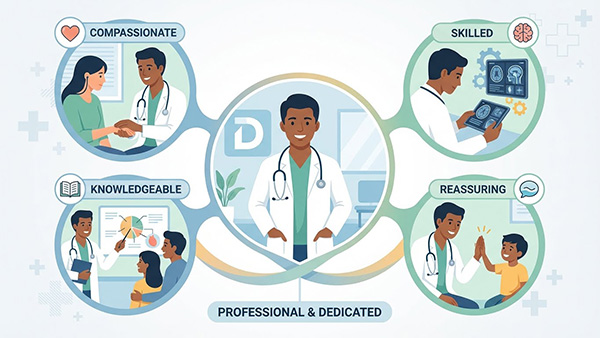
When considering how to describe a doctor, focus on their professional skills, personal qualities, and patient interactions. Combining skill-based adjectives like knowledgeable or skilled with personality-based adjectives such as friendly or considerate provides a balanced description. You can also emphasize professionalism and patient care to ensure the description is comprehensive, accurate, and resonates with both colleagues and patients.
Adjectives can be classified by their function: descriptive adjectives state qualities of a noun (e.g., skilled doctor, compassionate doctor), while limiting adjectives restrict the noun’s meaning (e.g., leading doctor, primary care physician). In the context of describing doctors, adjectives help to convey a comprehensive picture of their professional identity and their impact on patients.
In professional settings, describing a doctor effectively often involves highlighting teamwork and communication skills. Words describing a doctor towards the team such as collaborative, supportive, reliable, and respectful convey how a doctor contributes positively to group dynamics.
Likewise, words to describe physician interaction like empathetic, attentive, communicative, and considerate capture the quality of a doctor’s engagement with patients and colleagues. Including these descriptors in performance reviews, case studies, or narratives can create a well-rounded view of a doctor’s interpersonal and professional strengths.
Structural Breakdown
Adjectives typically appear before the noun they modify (attentive doctor) or after a linking verb such as “is,” “are,” “was,” “were,” “seems,” or “appears” (The doctor is thorough). The placement of the adjective can sometimes subtly change the emphasis of the sentence. For example, “a dedicated doctor” emphasizes the doctor’s dedication, while “the doctor is dedicated” emphasizes the doctor’s state of being.
Adjectives can also be modified by adverbs to provide further detail. For instance, you might say a doctor is “highly skilled” or “extremely compassionate.” The adverb intensifies the adjective, making the description more specific and impactful. Furthermore, adjectives can be combined to create more complex descriptions, such as “a knowledgeable and caring doctor.” The order of adjectives often follows general English grammar rules, with opinion adjectives usually preceding fact-based adjectives (e.g., “a wonderful, experienced doctor”).
Types and Categories of Adjectives for Doctors
Adjectives used to describe doctors can be categorized based on the aspect of the doctor they describe. Here are some common categories:
Skill-Based Adjectives
These adjectives describe a doctor’s medical expertise and abilities. They highlight the doctor’s competence in diagnosing, treating, and managing medical conditions.
Examples include:
- Skilled
- Experienced
- Knowledgeable
- Proficient
- Competent
- Adept
- Qualified
- Expert
- Specialized
- Trained
Personality-Based Adjectives
These adjectives describe a doctor’s personal qualities and character traits. They highlight how the doctor’s personality influences their interactions with patients and colleagues.
Examples include:
- Compassionate
- Empathetic
- Kind
- Patient
- Understanding
- Caring
- Friendly
- Approachable
- Considerate
- Gentle
Professionalism-Based Adjectives
These adjectives describe a doctor’s conduct and adherence to professional standards. They highlight the doctor’s commitment to ethical practices and responsible behavior.
Examples include:
- Ethical
- Reliable
- Responsible
- Diligent
- Dedicated
- Thorough
- Conscientious
- Disciplined
- Principled
- Honest
Patient Care-Based Adjectives
These adjectives describe a doctor’s approach to treating and interacting with patients. They highlight the doctor’s focus on patient well-being and satisfaction.
Examples include:
- Attentive
- Supportive
- Helpful
- Reassuring
- Encouraging
- Communicative
- Accessible
- Responsive
- Involved
- Patient-focused
Examples of Adjectives for Doctors
Here are several examples of adjectives used to describe doctors, organized by category:
Skill-Based Adjective Examples
The following table provides examples of skill-based adjectives used in sentences to describe doctors. These adjectives focus on the doctor’s medical abilities and expertise.
| Adjective | Example Sentence |
|---|---|
| Skilled | The skilled surgeon performed the complex operation with precision. |
| Experienced | The experienced physician has seen countless cases over the years. |
| Knowledgeable | The knowledgeable doctor was able to answer all of my questions. |
| Proficient | The proficient cardiologist quickly diagnosed the heart condition. |
| Competent | The competent general practitioner provided excellent care. |
| Adept | The adept neurologist accurately identified the source of the pain. |
| Qualified | The qualified specialist is board-certified in her field. |
| Expert | The expert oncologist is a leading researcher in cancer treatment. |
| Specialized | The specialized pediatrician focuses on children’s health issues. |
| Trained | The trained emergency room doctor is equipped to handle any medical crisis. |
| Masterful | The masterful dermatologist resolved my skin condition efficiently. |
| Versatile | The versatile doctor can handle a wide range of medical issues. |
| Accomplished | The accomplished surgeon is renowned for his innovative techniques. |
| Resourceful | The resourceful doctor used all available tools to diagnose the rare disease. |
| Astute | The astute physician immediately recognized the symptoms. |
| Brilliant | The brilliant doctor has made significant contributions to medical science. |
| Capable | The capable doctor handled the emergency situation with ease. |
| Seasoned | The seasoned doctor has a wealth of knowledge and experience. |
| Talented | The talented doctor is highly regarded by his peers. |
| Well-versed | The well-versed physician is knowledgeable in many areas of medicine. |
| Practiced | The practiced doctor performed the procedure flawlessly. |
| Master | He is a master diagnostician, known for his accuracy. |
Personality-Based Adjective Examples
The following table provides examples of personality-based adjectives used in sentences to describe doctors. These adjectives focus on the doctor’s personal qualities and character traits.
| Adjective | Example Sentence |
|---|---|
| Compassionate | The compassionate doctor showed genuine concern for her patients’ well-being. |
| Empathetic | The empathetic physician understood my fears and anxieties. |
| Kind | The kind doctor always took the time to listen to my concerns. |
| Patient | The patient doctor carefully explained the treatment plan. |
| Understanding | The understanding physician provided emotional support during a difficult time. |
| Caring | The caring doctor made me feel comfortable and safe. |
| Friendly | The friendly doctor greeted me with a warm smile. |
| Approachable | The approachable physician made it easy to ask questions. |
| Considerate | The considerate doctor took my preferences into account. |
| Gentle | The gentle doctor was careful during the examination. |
| Sympathetic | The sympathetic doctor showed genuine concern for her patients’ suffering. |
| Warm | The warm doctor created a welcoming environment for her patients. |
| Calm | The calm doctor reassured the anxious patient before the procedure. |
| Reassuring | Her reassuring demeanor helped alleviate my fears. |
| Thoughtful | The thoughtful doctor remembered details from previous conversations. |
| Attentive | The attentive doctor listened carefully to my symptoms. |
| Gracious | The gracious doctor thanked the staff for their hard work. |
| Good-humored | The good-humored doctor made the visit more pleasant. |
| Genuine | The genuine doctor truly cared about her patients’ well-being. |
| Kind-hearted | The kind-hearted doctor volunteered her time at the local clinic. |
| Benevolent | The benevolent doctor donated generously to medical research. |
| Good-natured | The good-natured doctor had a positive impact on everyone she met. |
Professionalism-Based Adjective Examples
The following table provides examples of professionalism-based adjectives used in sentences to describe doctors. These adjectives focus on the doctor’s conduct and adherence to professional standards.
| Adjective | Example Sentence |
|---|---|
| Ethical | The ethical doctor always puts the patient’s best interests first. |
| Reliable | The reliable physician can always be counted on to provide accurate information. |
| Responsible | The responsible doctor carefully monitors her patients’ progress. |
| Diligent | The diligent physician thoroughly researches each case. |
| Dedicated | The dedicated doctor works long hours to provide the best possible care. |
| Thorough | The thorough doctor conducts comprehensive examinations. |
| Conscientious | The conscientious physician pays close attention to detail. |
| Disciplined | The disciplined doctor adheres to strict medical protocols. |
| Principled | The principled physician maintains the highest standards of integrity. |
| Honest | The honest doctor provides truthful and transparent information. |
| Upright | The upright doctor always acts with integrity. |
| Respectful | The respectful doctor treats everyone with dignity. |
| Prudent | The prudent doctor makes wise decisions. |
| Efficient | The efficient doctor manages her time well. |
| Organized | The organized doctor keeps meticulous records. |
| Punctual | The punctual doctor is always on time for appointments. |
| Professional | The professional doctor maintains a courteous demeanor. |
| Collaborative | The collaborative doctor works well with other healthcare providers. |
| Accountable | The accountable doctor takes responsibility for her actions. |
| Reliable | The reliable doctor can be trusted to provide accurate information. |
| Objective | The objective doctor makes unbiased decisions. |
| Impartial | The impartial doctor treats all patients fairly. |
Patient Care-Based Adjective Examples
The following table provides examples of patient care-based adjectives used in sentences to describe doctors. These adjectives focus on the doctor’s approach to treating and interacting with patients.
| Adjective | Example Sentence |
|---|---|
| Attentive | The attentive doctor listened carefully to my symptoms. |
| Supportive | The supportive physician provided encouragement and guidance. |
| Helpful | The helpful doctor offered practical advice and resources. |
| Reassuring | The reassuring physician calmed my fears and anxieties. |
| Encouraging | The encouraging doctor motivated me to follow the treatment plan. |
| Communicative | The communicative doctor clearly explained the diagnosis and treatment options. |
| Accessible | The accessible physician was easy to reach and schedule appointments with. |
| Responsive | The responsive doctor promptly addressed my concerns. |
| Involved | The involved physician actively participated in my care. |
| Patient-focused | The patient-focused doctor prioritized my well-being above all else. |
| Empowering | The empowering doctor gave me the tools to manage my health. |
| Understanding | The understanding doctor acknowledged my feelings. |
| Caring | The caring doctor made me feel safe and comfortable. |
| Respectful | The respectful doctor listened to my opinions. |
| Compassionate | The compassionate doctor showed genuine concern. |
| Thoughtful | The thoughtful doctor remembered personal details. |
| Personable | The personable doctor made me feel at ease. |
| Empathetic | The empathetic doctor understood my emotional state. |
| Considerate | The considerate doctor took my needs into account. |
| Attentive | The attentive doctor was focused on my concerns. |
| Humanistic | The humanistic doctor treated me as a whole person. |
| Wholistic | The wholistic doctor looked at the bigger picture of my health. |
Usage Rules
When using adjectives to describe doctors, it’s important to follow standard English grammar rules:
- Adjective Order: When using multiple adjectives, follow the general order: opinion, size, age, shape, color, origin, material, and purpose. For example, “a caring, experienced doctor” (opinion before age/experience).
- Adjective Agreement: Adjectives do not change form based on the number or gender of the noun they modify (unlike some other languages).
- Comparative and Superlative Forms: Use comparative forms (e.g., more compassionate, better trained) to compare two doctors, and superlative forms (e.g., most skilled, best doctor) to compare three or more.
- Proper Adjectives: Adjectives derived from proper nouns (e.g., “American doctor,” “Freudian analyst”) should be capitalized.
Common Mistakes
Here are some common mistakes to avoid when using adjectives to describe doctors:
| Incorrect | Correct | Explanation |
|---|---|---|
| The doctor is more experience. | The doctor is more experienced. | Adjectives must be in the correct form. |
| A compassion doctor. | A compassionate doctor. | Use the correct adjective form. |
| The most skilledest doctor. | The most skilled doctor. | Avoid double superlatives. |
| The doctor is very compassion. | The doctor is very compassionate. | Use the correct adjective form. |
| An experience doctor. | An experienced doctor. | Use “an” before words that begin with a vowel sound. |
Practice Exercises
Complete the following sentences with appropriate adjectives to describe doctors.
| Question | Answer |
|---|---|
| 1. The ______ doctor listened attentively to my concerns. | 1. The attentive doctor listened attentively to my concerns. |
| 2. She is a ______ physician with years of experience. | 2. She is a skilled physician with years of experience. |
| 3. The ______ doctor always puts his patients first. | 3. The ethical doctor always puts his patients first. |
| 4. He is known as a ______ and ______ surgeon. | 4. He is known as a knowledgeable and caring surgeon. |
| 5. The ______ doctor made me feel comfortable during the examination. | 5. The gentle doctor made me feel comfortable during the examination. |
| 6. The ______ doctor is always on time for appointments. | 6. The punctual doctor is always on time for appointments. |
| 7. The ______ doctor provided ______ support during a difficult time. | 7. The understanding doctor provided emotional support during a difficult time. |
| 8. The ______ doctor thoroughly researches each case. | 8. The diligent doctor thoroughly researches each case. |
| 9. The ______ doctor is easy to reach and schedule appointments with. | 9. The accessible doctor is easy to reach and schedule appointments with. |
| 10. The ______ doctor motivated me to follow the treatment plan. | 10. The encouraging doctor motivated me to follow the treatment plan. |
Exercise 2: Choose the best adjective to describe the doctor in each scenario.
| Scenario | Adjectives (Choose One) | Answer |
|---|---|---|
| The doctor always arrives on time and is well-prepared for appointments. | (a) Compassionate (b) Punctual (c) Knowledgeable | (b) Punctual |
| The doctor is known for their ability to understand and share the feelings of their patients. | (a) Empathetic (b) Skilled (c) Efficient | (a) Empathetic |
| The doctor has a deep understanding of medicine and can answer complex questions with ease. | (a) Friendly (b) Thorough (c) Knowledgeable | (c) Knowledgeable |
| The doctor is careful and meticulous in their work, ensuring no detail is overlooked. | (a) Diligent (b) Approachable (c) Kind | (a) Diligent |
| The doctor makes patients feel at ease and is easy to talk to. | (a) Responsible (b) Approachable (c) Dedicated | (b) Approachable |
| The doctor consistently demonstrates a commitment to doing what is right and just. | (a) Ethical (b) Supportive (c) Responsive | (a) Ethical |
| The doctor is always there for their patients, providing consistent and reliable care. | (a) Reliable (b) Gentle (c) Versatile | (a) Reliable |
| The doctor is able to handle a wide range of medical issues effectively. | (a) Versatile (b) Caring (c) Attentive | (a) Versatile |
| The doctor shows genuine concern for their patients’ well-being. | (a) Honest (b) Compassionate (c) Trained | (b) Compassionate |
| The doctor is focused on the patient’s needs and preferences. | (a) Patient-focused (b) Organized (c) Expert | (a) Patient-focused |
Advanced Topics
For advanced learners, consider exploring the nuances of adjective usage in formal medical writing, the impact of cultural differences on adjective choice (e.g., what is considered “respectful” may vary), and the use of figurative language (metaphors, similes) to describe doctors in creative writing. Additionally, analyzing the connotations of different adjectives can enhance your ability to convey subtle shades of meaning.
Another advanced topic is the study of medical jargon and how it intersects with descriptive adjectives. Some adjectives are commonly used within the medical community but may not be widely understood by the general public.
For example, understanding the difference between “acute” and “chronic” is crucial when describing a patient’s condition, and these terms often modify other adjectives to provide a more precise description.
FAQ
What is the difference between “skilled” and “knowledgeable” when describing a doctor?
“Skilled” refers to the doctor’s proficiency in performing medical procedures and applying their knowledge in practical situations. “Knowledgeable” refers to the doctor’s depth of understanding of medical science and their ability to recall and apply medical information. A doctor can be knowledgeable without being particularly skilled, and vice versa, although the best doctors are both.
How important is it to use positive adjectives when providing feedback about a doctor?
While it’s important to be honest, focusing on positive adjectives can create a more constructive and encouraging tone. Even when addressing areas for improvement, framing your feedback with positive attributes can make it more receptive. For example, instead of saying “The doctor was not attentive,” you could say “The doctor is knowledgeable but could be more attentive to patient concerns.”
Can the same adjective be used to describe different aspects of a doctor’s character?
Yes, some adjectives can apply to multiple aspects. For example, “thorough” can describe a doctor’s examination process (skill-based) and their attention to detail (professionalism-based). The context in which the adjective is used will determine its specific meaning.
Are there any adjectives that should be avoided when describing doctors?
Avoid using adjectives that are vague, subjective, or potentially offensive. For example, avoid describing a doctor as “nice” (too general) or using adjectives that could be interpreted as discriminatory. Stick to adjectives that are specific, objective, and respectful.
How can I improve my vocabulary of adjectives for describing doctors?
Read medical articles, patient testimonials, and healthcare publications to see how adjectives are used in context. Use a thesaurus to find synonyms and related words. Practice using new adjectives in your writing and speaking. Pay attention to the adjectives used by native English speakers when they discuss doctors.
What is the role of adverbs in modifying adjectives describing doctors?
Adverbs intensify or qualify adjectives, adding nuance and precision. For example, instead of saying a doctor is “skilled,” you could say they are “highly skilled” or “exceptionally skilled.” Adverbs allow you to convey the degree or extent of a particular quality.
How do cultural differences affect the adjectives used to describe doctors?
Cultural values can influence which qualities are emphasized when describing doctors. For example, in some cultures, respect for authority may be highly valued, leading to the use of adjectives like “revered” or “esteemed.” In other cultures, a more egalitarian approach may be preferred, leading to adjectives like “approachable” or “collaborative.”
Is it appropriate to use informal adjectives when describing a doctor?
In most professional and formal contexts, it’s best to avoid informal adjectives. However, in casual conversations or personal narratives, informal adjectives may be appropriate. Consider your audience and the purpose of your communication when choosing adjectives.
Conclusion
Mastering the use of adjectives to describe doctors is a valuable skill for effective communication in various contexts. By understanding the different categories of adjectives, following usage rules, avoiding common mistakes, and practicing regularly, you can enhance your ability to convey precise and informative descriptions of medical professionals.
Remember to consider the context, audience, and purpose of your communication when selecting adjectives.
By continually expanding your vocabulary and paying attention to the nuances of adjective usage, you can effectively communicate your thoughts and feelings about doctors, whether you’re providing feedback, writing a character, or simply discussing your healthcare experiences. The key is to be specific, accurate, and respectful in your choice of words, ensuring that your descriptions are both informative and appropriate.

M. Thomas writes language-learning guides for EnglishScribe, covering grammar, vocabulary, and everyday expressions. Through clear explanations, practical examples, and exercises, Thomas helps ESL learners understand English and build confidence in using it.